
Local Customs in Uzbekistan
A practical guide to Uzbek hospitality, greetings, dress, dining, religious-site etiquette, photography, markets, family traditions and respectful behaviour—so you can travel with confidence from Tashkent to Samarkand, Bukhara and Khiva.
What should travellers know about customs in Uzbekistan?
Uzbekistan is known for warm hospitality and a strong connection between family, community, food, craftsmanship and history. Visitors do not need to master every local tradition, but showing curiosity and respect makes interactions easier and more rewarding.
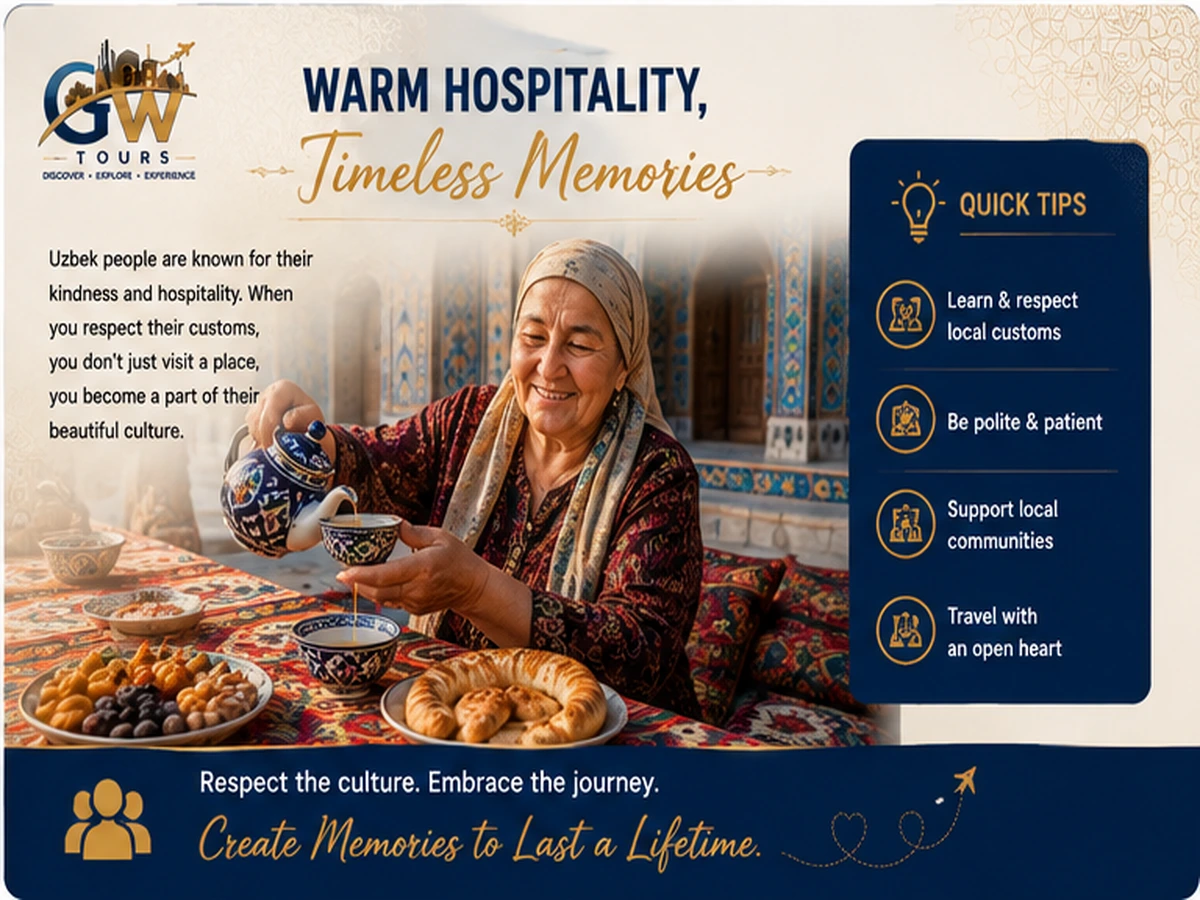
Guests are often treated generously. Tea, food and conversation can be important parts of welcoming visitors.
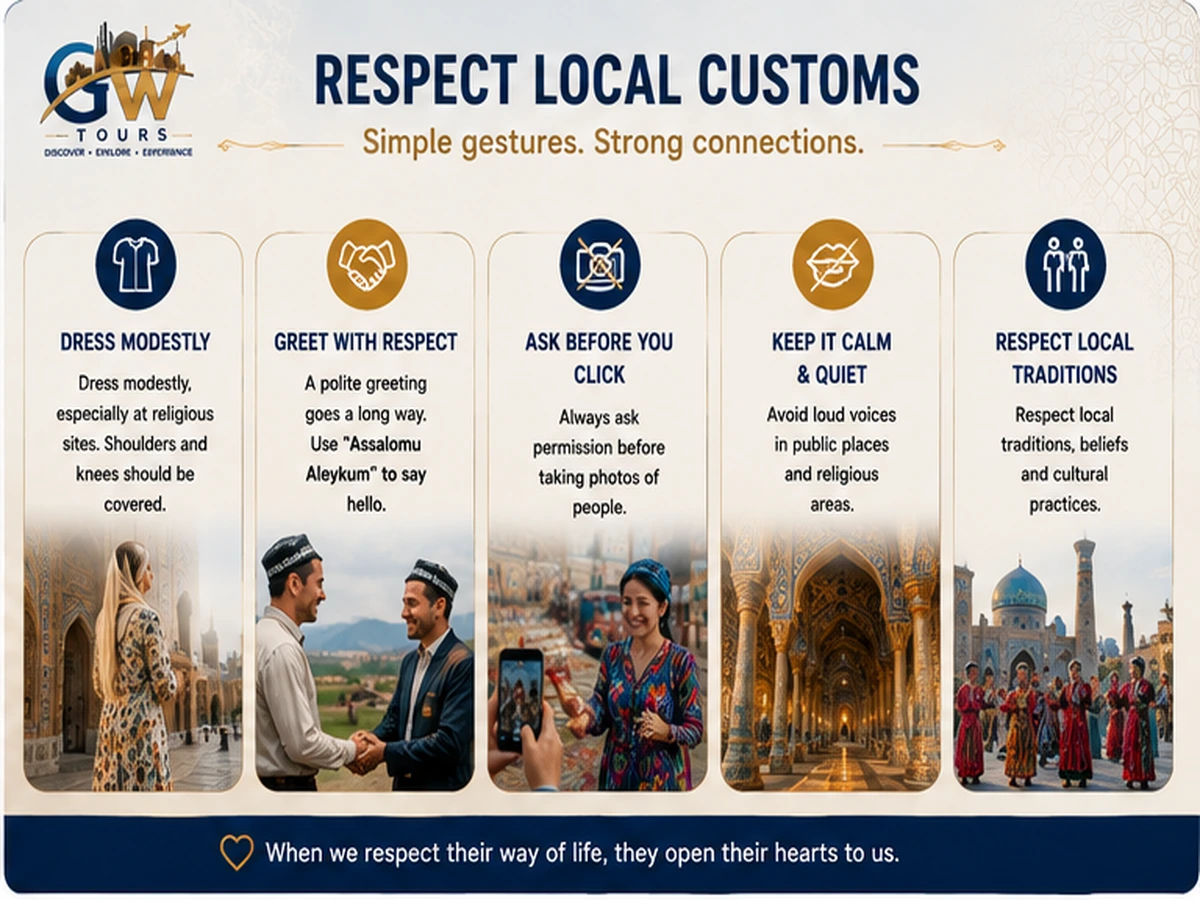
Dress comfortably for cities, but choose more conservative clothing for mosques, mausoleums and traditional settings.
Ask before photographing people, follow monument rules and listen to your guide when customs vary by place.
Essential Uzbek customs for international visitors
Greetings
A polite greeting and a friendly attitude are usually the best starting point. A handshake is common, while personal space and religious or family customs should be respected.
When unsure, follow the lead of your host or guide.
Entering a home
If invited into a traditional home, observe what your host does. Removing shoes may be expected, particularly in homes where carpets are central to the living space.
Tea culture
Tea is closely associated with hospitality. Accepting a cup can be a simple way to participate in the social rhythm of a visit, although guests should communicate dietary or health restrictions.
Respect for elders
Respect for older family members is an important social value. Let local hosts guide the interaction rather than assuming that every family follows exactly the same practice.
Hospitality
Sharing food, tea and conversation is often a meaningful expression of welcome. A sincere thank-you is appropriate even when you cannot accept everything offered.
Follow local context
Customs can differ between a modern Tashkent restaurant, a family home, a Bukhara neighbourhood and a religious complex. Context matters.
Uzbek hospitality is part of the travel experience
Across Uzbekistan, hospitality can turn a sightseeing stop into a personal cultural encounter. A local meal, a cup of tea, an artisan conversation or a family welcome can reveal a side of the Silk Road that monuments alone cannot show.
- Accept hospitality graciously when it is comfortable for you.
- Thank hosts and guides for their time and generosity.
- Ask questions about food, crafts and local traditions.
- Let your guide explain regional differences.
- Respect private homes and family spaces.
A good visitor's rule
When you are uncertain about a custom, observe first, ask politely, then follow the local lead. This simple approach works across restaurants, homes, markets, mosques, museums, bazaars and cultural performances.
Dress etiquette in Uzbekistan
Uzbekistan welcomes international travellers, and dress in major cities can be modern. For cultural and religious sites, however, modest clothing is the safest and most respectful choice.
In Tashkent
Modern urban clothing is common. Dress for the season and your activities while maintaining ordinary public courtesy.
At mosques
Choose clothing that covers shoulders and knees. Follow any site-specific requirements and remove shoes when requested.
At mausoleums
Modest clothing is recommended. Carry a light scarf or layer if your itinerary includes religious locations.
In villages & homes
More conservative clothing is a considerate choice, particularly when visiting traditional communities or private homes.
How to behave at mosques, mausoleums and historic religious sites
Before entering
- Check whether the site is open to visitors.
- Dress modestly.
- Remove shoes where required.
- Observe signs and instructions.
- Ask before photographing worshippers.
While inside
- Keep your voice low in prayer areas.
- Do not interrupt worship or ceremonies.
- Stay in areas permitted for visitors.
- Do not touch religious objects unless invited.
- Follow your guide's instructions where rules vary.
Dining customs and Uzbek food etiquette
Shared meals
Meals can be social occasions, especially when guests are welcomed into homes or traditional settings. Sharing dishes and conversation is part of the experience.
Plov and bread
Plov is one of Uzbekistan's best-known dishes, while bread is treated with cultural respect. Avoid careless handling or wasting food when possible.
Dietary requirements
Tell Great World Tours and restaurants about vegetarian, vegan, allergy or other dietary requirements in advance so suitable arrangements can be planned.
Tea and conversation
Tea can accompany conversation and hospitality. Accepting a drink is often a friendly gesture, but it is perfectly reasonable to explain if you cannot have it.
Alcohol
Alcohol is available in many tourist-oriented restaurants and hotels, but practices differ by venue and community. Follow the setting and local expectations.
Restaurant etiquette
In restaurants, normal international dining etiquette is generally appropriate. Your guide can help with regional dishes, portions and unfamiliar ingredients.
Replace with the final Great World Tours image when available.
Experience Uzbekistan through people, crafts and traditions
Uzbekistan's cultural identity is visible in its architecture, but it is equally present in ceramics, embroidery, textiles, food, music, family hospitality and neighbourhood life.
In Samarkand, Bukhara and Khiva, travellers can combine UNESCO World Heritage monuments with local experiences. Tashkent offers a more contemporary view of Uzbek life, while the Fergana Valley is particularly associated with crafts and traditional cultural practices.
Artisan workshops
Meet makers working with ceramics, textiles, wood and other traditional crafts.
Local food
Discover regional dishes and the stories behind the ingredients and preparation.
Mahalla life
Learn how traditional neighbourhoods remain part of everyday community life.
Cultural performances
Where available, experience music, dance and performances in appropriate local settings.
Can you photograph people and places in Uzbekistan?
Photography is one of the great pleasures of Uzbekistan travel, especially around Registan Square, Poi Kalyan, Itchan Kala and the historic streets of Bukhara and Khiva. The key is to distinguish public scenery from private people and sensitive locations.
Ask people first
For portraits or close photographs, ask permission. A smile and a simple gesture can communicate your intention when language is limited.
Respect worship
Do not photograph people during prayer in a way that intrudes on their worship. Follow signs and instructions inside religious sites.
Check restrictions
Some locations may restrict photography or filming. Pay attention to signs, staff and your guide rather than assuming every area is unrestricted.
Market etiquette and shopping customs
At Uzbek bazaars
Markets are lively social spaces. Walk carefully, avoid blocking traders and ask before taking close-up photographs of people or stalls.
Friendly conversation is often welcome. In places where bargaining is customary, negotiate politely rather than aggressively.
Buying traditional crafts
For silk, ceramics, carpets and embroidery, ask about how and where an item was made. If an item may be an antique or has export restrictions, request documentation and verify the rules before buying.
How customs fit into different Uzbekistan journeys
The best cultural advice depends on the type of trip you are taking. Great World Tours can build local context into private, luxury, family, adventure and business itineraries.
Private Tours
Travel with a guide who can explain customs in real time and adapt visits around your interests.
Luxury Tours
Combine premium hotels and private transfers with carefully selected cultural encounters.
Family Holidays
Introduce children to Uzbek food, crafts, history and hospitality at a comfortable pace.
Adventure Tours
Prepare for mountain, desert and rural environments while respecting local communities.
Business Travel
Allow time for relationship building and follow the etiquette of your Uzbek hosts and professional setting.
MICE
For meetings, incentives, conferences and events, cultural activities can be incorporated without compromising professional schedules.
Silk Road Travel
Combine Tashkent, Samarkand, Bukhara and Khiva with cultural encounters that explain the living heritage behind the monuments.
Uzbekistan customs at a glance
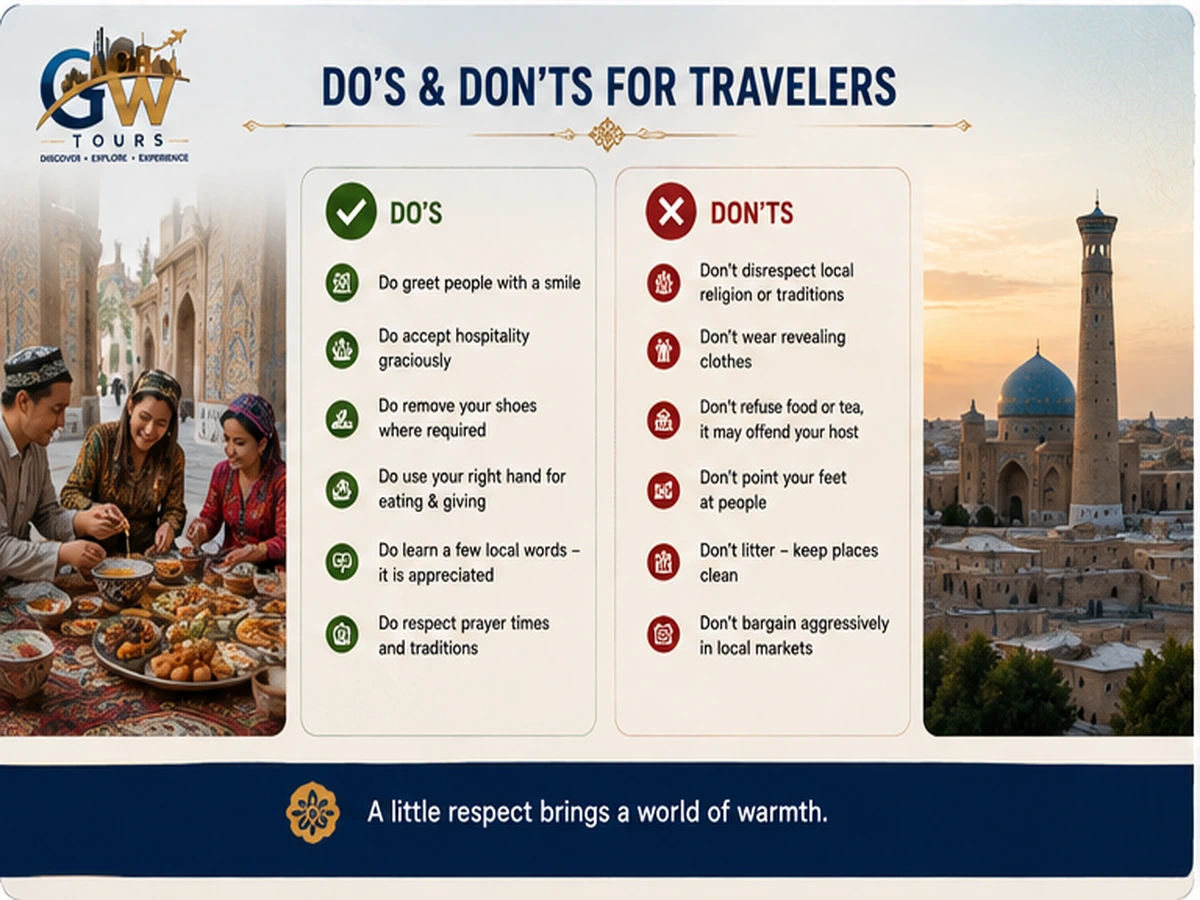
Do
- Greet people politely.
- Dress modestly at religious sites.
- Ask before photographing people.
- Accept hospitality graciously.
- Follow local instructions.
Be mindful of
- Religious ceremonies.
- Private family spaces.
- Photography restrictions.
- Food and dietary differences.
- Local customs that vary by region.
When unsure
- Observe what locals do.
- Ask your guide.
- Read posted signs.
- Choose the respectful option.
- Remember that context matters.
Build a culturally respectful Uzbekistan journey
Tell us what you want to experience. We can help combine historic monuments, local food, artisan workshops, cultural encounters, private guiding, airport transfers and accommodation into a practical itinerary.
Contact Great World Tours
Phone / WhatsApp: +998 90 988 89 18
Email: info@greatworldtours.com
Telegram: Great World Tours
Available for private tours, luxury tours, family holidays, adventure travel, business travel and tailor-made Uzbekistan itineraries.
Let Great World Tours help you travel with confidence
Understanding local customs does not mean memorising a rulebook. It means approaching Uzbekistan with curiosity, respect and an openness to learning.
Do customs differ across Uzbekistan?
Yes. Uzbekistan has a shared cultural foundation, but the atmosphere and traditions can feel different from one region or city to another. Your guide can explain local context as you travel.
Tashkent
Uzbekistan's modern capital combines contemporary urban life with mahallas, markets, museums and historic neighbourhoods.
Samarkand
Expect a strong connection to Silk Road history, monumental architecture, pilgrimage traditions and a busy visitor environment around Registan Square.
Bukhara
Bukhara's historic centre preserves a particularly strong sense of traditional urban heritage, with mosques, madrasas, bazaars and neighbourhood life.
Khiva
Inside Itchan Kala, historic architecture and everyday life exist side by side. Respect homes, workshops and residents while exploring the old city.
Family life, children and social etiquette
Family is central to social life in Uzbekistan. Travellers may notice strong intergenerational relationships and warm attitudes toward children.
- Show respect when interacting with older people.
- Ask parents before photographing children.
- Do not assume that a private family moment is suitable for photography.
- Teach children to follow the same etiquette as adults at religious and historic sites.
- Allow hosts to introduce children or family members naturally.
Travelling with children
Uzbekistan can be an engaging destination for families because food, crafts, markets, architecture and train journeys create varied experiences. A private itinerary can also reduce long waits and allow breaks when children need them.
Language and communication etiquette
Uzbek is the official language, while Russian remains widely used in many settings. English is more common in tourist-oriented hotels, guides and businesses than in everyday local interactions.
Learn a few Uzbek words
A simple greeting, thank-you and polite expression can make interactions warmer. Even imperfect pronunciation is usually appreciated as an effort.
Use your guide
A professional local guide can help with conversations, explain cultural references and prevent small misunderstandings from becoming awkward situations.
Communicate patiently
When there is a language barrier, speak clearly, use simple phrases and avoid assuming that a nod or gesture has exactly the same meaning everywhere.
Etiquette on trains, roads and public transport
Afrosiyob Train
Keep noise reasonable, respect other passengers and allow people to board and leave efficiently. Avoid blocking aisles with luggage.
Private vehicles
Follow your driver's guidance on local roads and stopping points. Keep valuables secure and avoid distracting the driver.
Flights & airports
Observe airport security and baggage rules. Airport transfers arranged by Great World Tours can simplify arrival and departure logistics.
Replace with the final Great World Tours image when available.
Respectful travel creates better cultural experiences
The most memorable moments in Uzbekistan often happen away from a checklist of monuments. A conversation with an artisan, a traditional meal, a tea ceremony or a walk through a historic neighbourhood can provide context that turns sightseeing into understanding.
Great World Tours can incorporate these experiences into a private Uzbekistan itinerary while considering pace, interests, accessibility, dietary needs and the cultural setting of each activity.
Local artisans
Explore ceramics, textiles, woodwork and embroidery through respectful encounters with makers.
Traditional cuisine
Discover plov, bread, samsa, lagman and regional dishes with guidance on ingredients and dining customs.
Historic neighbourhoods
See how living communities coexist with Uzbekistan's remarkable Silk Road heritage.
Desert & mountain life
Combine cultural understanding with experiences around the Kyzylkum Desert, Chimgan Mountains and Charvak Lake.
What should you know when buying Uzbek crafts?
Silk
Ask about fibre content, production methods and provenance when buying silk textiles or scarves.
Ceramics
Uzbek ceramic traditions vary by region. Ask artisans about the technique and origin of a piece.
Carpets
For higher-value carpets, request documentation and confirm export requirements before purchase.
Embroidery
Textiles and embroidered pieces can make practical souvenirs. Ask whether a piece is handmade and where it was produced.
How can travellers respect local communities?
Support local businesses
Choose local guides, artisans, restaurants and experiences when they provide appropriate quality and value.
Photograph thoughtfully
Ask permission for personal portraits and avoid turning private life into a tourist spectacle.
Leave places better
Reduce litter, protect historic surfaces and follow conservation rules at UNESCO World Heritage sites and natural areas.
Listen to local voices
Let residents and guides explain traditions rather than judging customs only through your own cultural expectations.
Buy with context
Learning who made a craft and how it was produced makes shopping more meaningful and supports informed choices.
Travel respectfully
Courtesy, patience and curiosity are usually more valuable than knowing every rule in advance.
What should travellers avoid doing in Uzbekistan?
Avoid these behaviours
- Entering restricted religious areas.
- Photographing people without permission when a portrait is clearly personal.
- Touching historic or religious objects without permission.
- Ignoring posted photography or visitor restrictions.
- Making jokes about religion, traditions or private family matters.
- Assuming one city's customs represent every part of Uzbekistan.
Choose these instead
- Ask your guide when you are uncertain.
- Observe before acting.
- Use polite language and gestures.
- Follow the rules of each site.
- Show interest in local traditions.
- Give people privacy and dignity.
Suggested Uzbekistan trips with cultural context
3 Days
Focus on Tashkent and Samarkand, with major heritage sites, local cuisine and a private guide.
Explore 3-Day Options5 Days
Combine Tashkent, Samarkand and Bukhara for a compact Silk Road introduction.
Explore 5-Day Options7 Days
Allow more time for heritage, food, crafts and slower-paced cultural experiences.
Explore 7-Day Options10 Days
Create a deeper journey across Uzbekistan, potentially including Khiva and additional regional experiences.
Plan 10 DaysChoose the right travel style for you
Luxury Uzbekistan Tours
Premium accommodation, private transfers, local expertise and carefully selected cultural experiences.
Private Uzbekistan Tours
Flexible sightseeing with a dedicated guide and itinerary tailored around your priorities.
Family Holidays
Comfortable pacing, family-friendly activities and cultural experiences that work for different ages.
Adventure Tours
Combine Silk Road heritage with mountains, desert landscapes, horse riding, camel safari and outdoor experiences.
Travel with local knowledge, not just a timetable
A good Uzbekistan itinerary should connect places, people and practical logistics. Great World Tours can help you understand where to go, how long to stay and how to experience each destination respectfully.
Local Experts
Guides help explain history, culture, food and everyday customs in context.
Private Service
Tailor the pace, route and experiences to your interests.
Comfort
Coordinate hotels, private transportation and airport transfers for a smoother journey.
24/7 Support
Have a clear contact point while planning and travelling.
Replace with the final Great World Tours image when available.
Local Customs in Uzbekistan: Traveller FAQ
Is Uzbekistan friendly to international tourists?
Yes. Uzbekistan has a strong hospitality tradition and receives international visitors throughout the year. A respectful, curious attitude is the best way to engage with local communities.
What should I wear in Uzbekistan?
Major cities are generally modern, but modest clothing is recommended at mosques, mausoleums and other religious or culturally sensitive sites. Lightweight layers are useful because temperatures vary by season.
Do I need to cover my head in Uzbekistan?
Requirements depend on the location. Some religious sites may request head covering for women, while others may not. Carrying a light scarf is a practical option and your guide can explain site-specific expectations.
Can I wear shorts in Uzbekistan?
Shorts may be comfortable in casual urban settings and hot weather, but longer, more modest clothing is the safer choice for religious sites, traditional homes and conservative settings.
Can I take photographs of people in Uzbekistan?
It is courteous to ask permission for personal portraits, particularly close-up photographs. At religious sites, ceremonies and private homes, follow local instructions and avoid intrusive photography.
Can I photograph mosques and historic monuments?
Photography is permitted in many tourist locations, but restrictions can apply to specific areas, ceremonies or institutions. Follow posted signs, staff instructions and your guide's advice.
Is bargaining expected in Uzbekistan?
Friendly bargaining may be common in some bazaars and souvenir settings, but it is not appropriate everywhere. Ask your guide whether bargaining is customary before starting.
What is Uzbek hospitality like?
Hospitality is an important part of Uzbek social culture. Guests may be offered tea, food and conversation. A sincere thank-you and respectful participation are appropriate.
Is it rude to refuse food or tea?
Not necessarily. If you cannot accept something because of allergies, diet, health or preference, explain politely. Hosts generally appreciate clear communication.
Should I remove my shoes in Uzbekistan?
In a private home, mosque or certain traditional settings, shoes may need to be removed. Watch what others do and follow your host or guide's instructions.
How should I behave in a traditional Uzbek home?
Follow the host's lead, ask before taking photographs, respect private rooms and family members, and show appreciation for food and hospitality.
How should I behave around elderly people?
Politeness and respect toward elders are valued. Allow your hosts or guide to establish the appropriate form of greeting and interaction.
Are Uzbekistan's customs the same in Tashkent, Samarkand, Bukhara and Khiva?
There are shared national traditions, but local environments differ. Tashkent is highly urban, while historic cities and rural areas can have more traditional social settings.
Can tourists enter mosques in Uzbekistan?
Many historic and active religious sites welcome visitors subject to rules and opening arrangements. Dress modestly and follow instructions about prayer areas, footwear and photography.
Can non-Muslims visit Islamic monuments?
Many historic Islamic monuments in Uzbekistan are important cultural and architectural attractions and may be visited by non-Muslims. Access depends on the individual site and current rules.
What should I know about Uzbek food etiquette?
Meals are often social. Bread has cultural importance, and dishes may be shared. Tell your tour company about dietary requirements in advance so restaurants and hosts can prepare appropriately.
Is vegetarian food available in Uzbekistan?
Vegetarian options can be arranged, especially in tourist areas, hotels and restaurants. Advance notice is recommended because traditional cuisine often includes meat.
Can I drink alcohol in Uzbekistan?
Alcohol is available in many restaurants and hotels, but practices vary. Follow the setting and avoid assuming that every private or religious environment is appropriate for alcohol.
What language is spoken in Uzbekistan?
Uzbek is the official language. Russian is also widely used, and English is more common in tourism. A local guide can bridge language gaps during a private journey.
Should I learn Uzbek before visiting?
You do not need to be fluent. Learning a few polite expressions can be useful and demonstrates respect for local culture.
Is tipping customary in Uzbekistan?
Tipping practices vary by service and situation. Your tour company can explain reasonable local expectations for guides, drivers, restaurants and other services based on the current arrangement.
Is Uzbekistan safe for tourists?
Uzbekistan is a well-established destination for international tourism. As with any trip, use normal precautions, respect local laws and follow current official travel advice.
Can I use my phone and internet in Uzbekistan?
Tourist hotels and urban areas commonly provide connectivity, while local SIM or eSIM options can be useful. Coverage can vary in remote mountain and desert areas.
How can a private guide help with local customs?
A local guide can explain etiquette before entering a home, mosque, market or cultural venue and can translate when a situation requires more context.
What is the best way to experience Uzbek culture?
Combine major Silk Road landmarks with local food, artisan workshops, markets, neighbourhood walks and respectful cultural encounters. A private itinerary allows these experiences to be paced naturally.
Can Great World Tours arrange a tailor-made cultural trip?
Yes. Great World Tours can plan private and tailor-made Uzbekistan journeys around your dates, interests, travel style, accommodation preferences and desired cultural experiences.
Come curious. Travel respectfully. Experience Uzbekistan deeply.
From Tashkent's contemporary energy to the Silk Road treasures of Samarkand, Bukhara and Khiva, Uzbekistan rewards travellers who take time to understand the culture behind the monuments.