
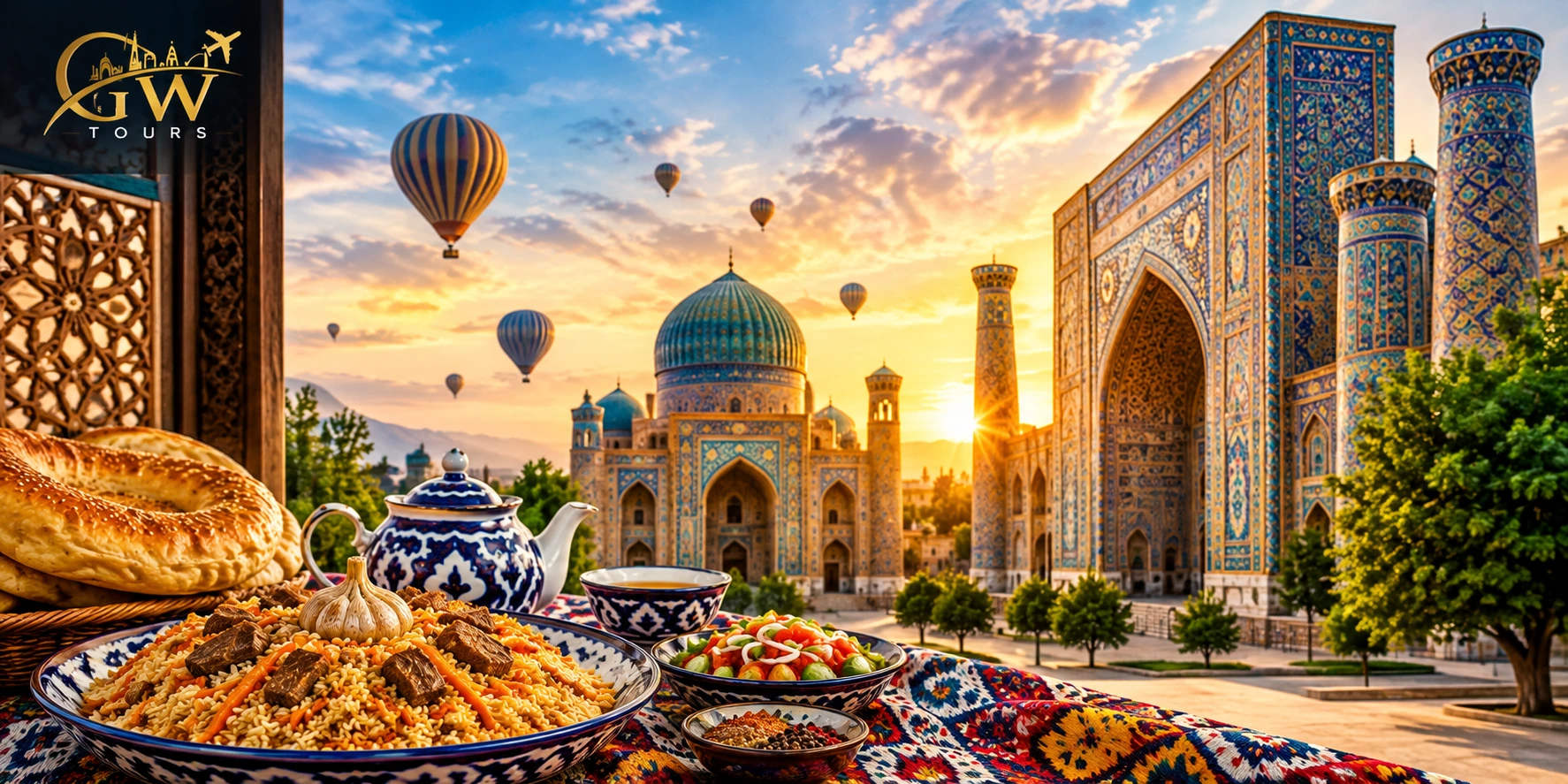
Uzbekistan Cuisine
Discover the flavours of the Silk Road through plov, samsa, lagman, manti, shashlik, fresh salads, traditional non bread and fragrant tea. Learn what to eat in Tashkent, Samarkand, Bukhara and Khiva, how Uzbek meals are enjoyed, and how Great World Tours can build culinary experiences into your private Uzbekistan journey.
What is Uzbek cuisine?
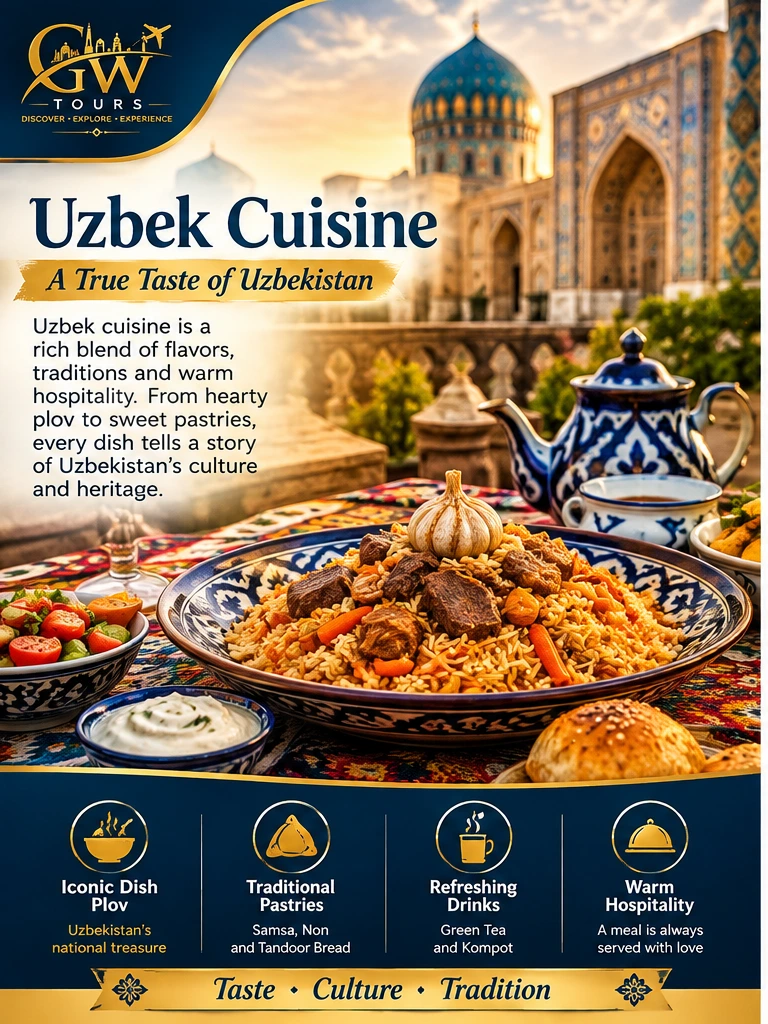
Uzbek cuisine is hearty, generous and deeply connected to hospitality. Its culinary traditions developed along the Silk Road, where ingredients, techniques and influences travelled between Central Asia and neighbouring regions. Rice, wheat, meat, vegetables, legumes, herbs, spices and dairy feature prominently.
The celebrated rice dish prepared with rice, carrots, onions and usually meat.
Steamed filled dumplings commonly served with savoury toppings or accompaniments.
Traditional Uzbek bread, an essential part of everyday meals and hospitality.
Tea is central to Uzbek hospitality and is commonly offered when guests arrive.
The most famous Uzbek dishes to try
These dishes are among the foods travellers are most likely to encounter during a classic Uzbekistan itinerary. Recipes and presentation vary between cities, restaurants and families.
Plov — Uzbekistan's iconic rice dish
Plov, also called osh, is one of the defining dishes of Uzbek cuisine. It is traditionally prepared with rice, carrots, onions and meat, with regional and family variations.
- Often associated with hospitality and celebrations.
- Can be served in large communal portions.
- Ask your guide about respected local places to try it.
Manti
Manti are steamed dumplings usually filled with seasoned meat and onions. They are a popular choice for travellers wanting a substantial traditional meal.
- Usually steamed rather than fried.
- Portion sizes can be generous.
- Vegetarian versions may be available in some places.
Samsa
Samsa are baked pastries with a savoury filling. They are commonly associated with meat and onion fillings, although other varieties can be found.
- Excellent as a snack or light meal.
- Often baked in a tandoor.
- Try them fresh and hot when possible.
Lagman
Lagman is a noodle-based dish with Central Asian roots, typically combining noodles, meat and vegetables in a savoury preparation.
- Available in different styles.
- Useful choice when you want a noodle-based meal.
- Ingredients can vary by restaurant.
Shashlik
Shashlik refers to skewered and grilled meat. It is a popular choice for diners looking for smoky, freshly grilled flavours.
- Often cooked over charcoal or open heat.
- Commonly served with onions or fresh accompaniments.
- Ask what meat is being served.
Non — traditional Uzbek bread
Non is far more than a side dish. Bread has an important cultural place in Uzbek hospitality and is normally treated with respect.
- Served with many meals.
- Different regions have distinctive styles.
- Excellent with tea and savoury dishes.
Other Uzbek foods and ingredients worth discovering
Shurpa
A comforting soup commonly prepared with meat and vegetables. It can be especially appealing during cooler weather.
Dimlama
A slow-cooked preparation combining meat and vegetables, often producing a rich and satisfying meal.
Chuchvara
Small dumplings served in different ways, including in broth or with accompaniments.
Achichuk
A fresh tomato-and-onion salad that provides a bright contrast to richer dishes.
Kazan dishes
Large cooking vessels known as kazan are central to many traditional preparations, especially rice and slow-cooked foods.
Dried fruit
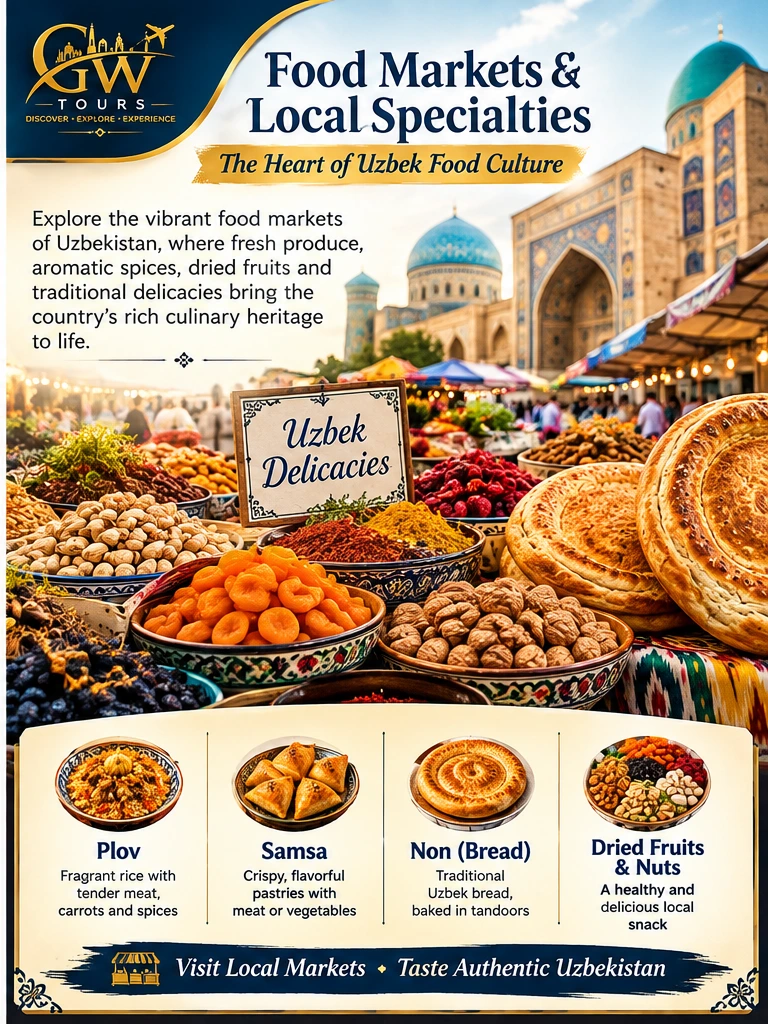
Uzbek markets are famous for colourful selections of dried fruit and nuts, useful for snacks and gifts.
Melons and grapes
Seasonal fruit can be a highlight of market visits, particularly during warmer months.
Green tea
Green tea is closely associated with Uzbek hospitality and is often offered throughout a meal or visit.
Uzbekistan food by city and region
A culinary journey through Uzbekistan is more interesting when food is treated as part of the geography. Tashkent, Samarkand, Bukhara, Khiva, the Fergana Valley and other regions each offer opportunities to explore local traditions.
Tashkent
The capital offers the broadest choice of restaurants, cafés, markets and modern interpretations of Uzbek food. It is a convenient place to begin a culinary exploration.
Samarkand
Samarkand combines famous Silk Road monuments with traditional foods and breads. A food experience can be naturally paired with Registan Square and the historic city.
Bukhara
Bukhara's old city provides atmospheric settings for traditional dining, tea and local hospitality alongside its monumental architecture.
Khiva
Khiva's Itchan Kala creates a distinctive backdrop for experiencing traditional Central Asian dishes and historic culinary traditions.
Fergana Valley
The valley is known for craft traditions and fertile agricultural areas. Markets and home-style experiences can reveal a different side of Uzbek food culture.
Shahrisabz
A visit to Shahrisabz can combine heritage sightseeing with regional food experiences during a private day trip or extended itinerary.
Nukus & Karakalpakstan
Western Uzbekistan offers a distinctive cultural setting and opportunities to explore food traditions beyond the classic Silk Road route.
Silk Road routes
Combining cities allows travellers to compare local cooking styles, breads, market produce and hospitality traditions.
Replace with the final Great World Tours cuisine image when available.
Experience Uzbek cuisine as part of the culture
The most memorable food experiences often happen outside a standard restaurant. A private culinary itinerary can include local markets, bread-making, traditional tea, artisan neighbourhoods, family-style meals and conversations with local hosts.
Tea ceremony
Share tea in a traditional setting and learn how hospitality shapes everyday life.
Market visit
Explore colourful produce, spices, dried fruit, nuts and fresh bread with a local expert.
Cooking class
Learn how a traditional dish is prepared and understand the ingredients behind Uzbek cooking.
Local dining
Experience authentic dishes in carefully selected restaurants or culturally appropriate local settings.
Why is bread important in Uzbekistan?
Non bread has a special cultural role in Uzbekistan. Bread is treated with respect and is closely connected with hospitality, family meals and everyday life.
- Non is commonly present at the table.
- Different regions and bakeries can have distinctive designs and textures.
- Traditional breads may be baked in a tandoor.
- Visitors should handle bread respectfully.
- Ask your guide about local bread traditions in each destination.
A simple cultural rule
When visiting a home or traditional setting, observe how local hosts handle bread and follow their example. Your guide can explain local customs without turning the experience into a formal lesson.
Is Uzbekistan good for vegetarians?
Yes, vegetarian travellers can enjoy Uzbekistan, but food planning is important because many traditional dishes feature meat. Fresh salads, bread, rice dishes, vegetable preparations, fruit, dairy products and some dumpling or noodle variations can provide alternatives.
Vegetarian choices
Look for vegetable salads, fresh produce, bread, rice-based dishes, soups without meat and vegetable-focused restaurant meals.
Communicate clearly
Explain your dietary requirements before ordering. A local guide can make communication easier and help identify suitable restaurants.
Private tours help
A private itinerary allows Great World Tours to consider dietary preferences when selecting hotels, restaurants and culinary experiences.
Food allergies, halal food and special diets
Halal food
Halal food is widely available in Uzbekistan. If your requirements are strict, confirm preparation and sourcing with the restaurant or your local guide.
Food allergies
Travellers with serious allergies should carry clear written information and communicate ingredients before eating.
Gluten-free
Rice, meat, vegetables and fruit can provide naturally gluten-free options, but sauces, breads and preparation methods must be checked individually.
Dairy-free
Many dishes can be adapted, but dairy may appear in drinks, desserts and some preparations. Confirm ingredients before ordering.
Tea culture in Uzbekistan
Tea welcomes guests
Offering tea is an important expression of hospitality. It can be part of a meal, a market visit or a conversation with local hosts.
Green and black tea
Both green and black tea can be encountered. Preferences and serving styles vary by household and region.
Tea accompaniments
Tea may be enjoyed with bread, sweets, dried fruit and other snacks, creating a simple but memorable social experience.
What should you look for in Uzbek markets?
Dried fruit
Apricots, raisins and other dried fruits are popular market products and practical gifts.
Nuts
Almonds, walnuts and other nuts are common in market displays and can be enjoyed as snacks.
Spices
Explore the aromas and colours of spices used in Central Asian cooking.
Fresh produce
Seasonal fruit and vegetables reveal how agriculture shapes everyday Uzbek cuisine.
Non bread
Look for distinctive breads from local bakeries and traditional markets.
Honey & sweets
Local sweets and honey products can be interesting culinary souvenirs when appropriately packaged.
Melons
Uzbekistan is known for seasonal melons, particularly during the warmer part of the year.
Grapes
Fresh and dried grapes are common in markets and are closely connected with the region's agricultural traditions.
What should travellers know about eating in Uzbekistan?
Meals can be generous
Uzbek hospitality often means abundant food. Do not feel pressured to finish every item, especially when several courses are served.
Sharing is common
Some meals are designed for sharing. Watch how local diners serve themselves and follow the lead of your hosts.
Respect bread
Bread carries cultural significance. Handle it respectfully and observe local customs when dining with hosts.
Tea is social
Accepting tea can be a simple way to participate in local hospitality and conversation.
Ask before photographing
Markets and food stalls can be excellent photography subjects, but ask permission before photographing people closely.
Use your guide
A local guide can explain unfamiliar dishes, ordering customs, ingredients and regional traditions.
Uzbek desserts, sweets and fruit
Halva
Different forms of halva and sweet confectionery can be found in Uzbek markets and shops.
Fresh fruit
Seasonal fruit is an important part of the food experience, especially during warmer months.
Dried fruit & nuts
A practical snack for long journeys and a popular item in colourful bazaars.
Why include a cooking class in your Uzbekistan tour?
A cooking class turns a meal into an experience. Travellers can learn about ingredients, preparation methods, family traditions and the role of food in Uzbek hospitality.
- Learn how a traditional dish is assembled.
- Discover local ingredients at a market.
- Understand the role of bread, tea and shared meals.
- Take the recipe and memory home with you.
Great World Tours culinary experiences
Depending on your itinerary, ask about cooking classes, market tours, traditional dining, tea experiences and other authentic culinary activities.
Ask About Culinary ExperiencesTell us what you want to taste in Uzbekistan
Share your travel dates, dietary preferences and interests. Great World Tours can help incorporate food experiences into private, luxury, family and adventure itineraries.
Great World Tours
Phone / WhatsApp: +998 90 988 89 18
Email: info@greatworldtours.com
Telegram: Great World Tours
Private Tours • Luxury Tours • Family Holidays • Adventure Tours • Culinary Experiences • Airport Transfers • Hotel Booking
Why travel with Great World Tours?
Local Experts
Local knowledge helps turn food stops into meaningful cultural experiences.
Curated Dining
Build authentic restaurants, markets and culinary activities into your itinerary.
Private Transport
Move comfortably between food experiences, monuments and hotels.
Personalized Tours
Design your Uzbekistan journey around your interests, dietary needs and travel style.
More culinary experiences to discover in Uzbekistan
Cooking Classes
Learn traditional recipes and techniques from local cooks.
Pottery Workshops
Pair culinary exploration with Uzbekistan's distinctive ceramic traditions.
Local Markets
Explore the ingredients, colours and everyday life behind Uzbek cuisine.
Uzbek dining customs every traveller should know
Food in Uzbekistan is closely connected with hospitality. A few simple cultural habits can make meals with local hosts more comfortable and meaningful.
Accepting hospitality
If tea, bread or food is offered, accepting at least a small amount can be a warm way to acknowledge the host's hospitality.
Respect for bread
Bread is culturally important. Avoid stepping over it or treating it casually, and follow the example of your hosts.
Shared meals
Some traditional meals are served communally. Wait for the host or guide to indicate where and how to begin.
Tea etiquette
Tea is often poured in relatively small quantities and replenished. The serving ritual can be part of the social experience.
Photography
Ask permission before photographing people closely, particularly during private meals or family gatherings.
Religious settings
When dining or visiting places connected with religious traditions, dress and behaviour should be respectful and appropriate.
How to choose restaurants in Uzbekistan
From traditional chaikhanas to contemporary restaurants, Uzbekistan has options for different budgets and travel styles. The right choice depends on the experience you want.
| Restaurant style | Best for | What to expect |
|---|---|---|
| Traditional restaurant | Classic Uzbek dishes | Plov, samsa, shashlik, salads, bread and tea in a local atmosphere. |
| Chaikhana | Casual local experience | Tea, simple meals and a relaxed setting; offerings vary by location. |
| Modern restaurant | Comfort and variety | Uzbek dishes alongside international choices and contemporary presentation. |
| Market food stall | Quick authentic tasting | Freshly prepared snacks and local specialities; hygiene and food handling should be considered. |
| Private culinary experience | Cultural immersion | Cooking, family-style dining or guided food experiences arranged around your itinerary. |
Food and drinking water tips for Uzbekistan
Choose busy food places
Restaurants and stalls with strong local turnover can be a practical choice because ingredients are more likely to be used frequently.
Drink safely
Travellers who are uncertain about local water should use bottled or otherwise reliably treated drinking water.
Eat food while fresh
Freshly prepared hot food is generally a sensible choice when exploring unfamiliar markets and casual dining environments.
Carry essentials
Long-distance journeys can be easier with bottled water, simple snacks and any personal medication you require.
Consider your tolerance
Rich meals, large portions and unfamiliar ingredients can affect travellers differently. Introduce new foods gradually if needed.
Ask your guide
Your Great World Tours guide can help you identify suitable restaurants and explain unfamiliar foods and ingredients.
What food is best to try in Uzbekistan by season?
Spring
Look for fresh greens, herbs, seasonal vegetables and lighter dishes as markets fill with new produce.
Summer
Enjoy seasonal fruit, melons, grapes, salads and refreshing drinks alongside traditional meals.
Autumn
Autumn markets can be especially attractive for fruit, nuts, dried produce and harvest-related flavours.
Winter
Hearty soups, hot tea, slow-cooked dishes and substantial meals can be particularly satisfying during colder weather.
What food souvenirs can you buy in Uzbekistan?
Food can make a memorable souvenir, but travellers should consider packaging, shelf life, airline rules and destination-country customs before purchasing edible products.
Dried fruit
Compact, colourful and easy to find in bazaars. Choose clean, well-packaged products for travel.
Nuts
Popular in Uzbek markets and useful as a snack. Check destination-country import restrictions.
Tea
A practical reminder of Uzbekistan's hospitality and tea culture.
Sweets
Traditional confectionery can be a pleasant gift when properly packaged for transport.
Combine food with Uzbekistan's traditional crafts
A culinary itinerary can naturally connect with the country's famous artisan traditions. Explore ceramics in the Fergana Valley, traditional textiles and embroidery, carpets, wood carving and historic bazaars.
- Traditional ceramics for serving tea and food.
- Handmade textiles and embroidery.
- Silk and other locally produced fabrics.
- Decorative pieces inspired by regional design.
Why combine experiences?
Food, crafts, architecture and hospitality are interconnected parts of Uzbekistan's cultural identity. A private guide can organize these experiences without turning the trip into a rushed checklist.
How did the Silk Road influence Uzbek cuisine?
Uzbekistan's location at the crossroads of historic trade routes helped connect Central Asian food traditions with ingredients, techniques and ideas travelling between regions. The result is a cuisine that is distinctly local while reflecting a wider Central Asian culinary landscape.
Trade & ingredients
Historic exchange helped ingredients and culinary ideas move between communities along the trade routes.
Hospitality
Large shared meals and generous hosting became important expressions of social life and community.
Regional variety
Different landscapes, agriculture and cultural communities contributed to distinctive regional dishes.
A food-focused Uzbekistan itinerary
Day 1–2: Tashkent
Begin with a city market, traditional restaurant and introduction to Uzbek tea, bread and classic dishes.
Day 3–4: Samarkand
Combine Registan Square and historic monuments with local bread, plov and a carefully selected dining experience.
Day 5–6: Bukhara
Explore the old city, enjoy traditional tea and discover local dishes in an atmospheric setting.
Day 7–8: Khiva
Walk through Itchan Kala and experience traditional food in the historic walled city.
Culinary experiences for every type of traveller
Luxury travellers
Combine premium hotels and private transport with carefully selected restaurants, private cooking experiences and market visits.
Families
Build in flexible meal times, familiar food choices and hands-on experiences suitable for different ages.
Couples
Enjoy intimate dining, traditional courtyards, evening meals and private cultural experiences.
Food lovers
Prioritize markets, cooking classes, regional dishes, local restaurants and conversations about food traditions.
Vegetarian travellers
Plan restaurants and meals in advance so suitable dishes and preparation requirements are understood.
Adventure travellers
Combine culinary experiences with mountain hiking, horse riding, desert camping and other active travel.
A guided market visit reveals everyday Uzbekistan
Markets are among the best places to see the relationship between agriculture, food, trade and daily life. A local guide can help you understand unfamiliar ingredients, seasonal produce and traditional products while navigating respectfully.
See local produce
Discover fruit, vegetables, herbs, nuts, spices and breads.
Learn what to buy
Understand which foods make practical souvenirs and snacks.
Replace with the final Great World Tours market or cuisine image when available.
Uzbekistan cuisine FAQ
What is the most famous food in Uzbekistan?
Plov, or osh, is arguably the most internationally recognized Uzbek dish. It is a rice-based dish commonly prepared with carrots, onions and meat, with regional and family variations.
What should I eat in Uzbekistan for the first time?
A good introduction includes plov, samsa, manti, lagman, shashlik, non bread, fresh salads and traditional tea.
Is Uzbek food spicy?
Uzbek cuisine is generally more aromatic and savoury than intensely hot. Individual dishes and restaurants vary, so ask about chilli if you prefer mild food.
Is Uzbek food halal?
Halal food is widely available in Uzbekistan. Travellers with strict requirements should still confirm preparation and sourcing with the restaurant or local guide.
Can vegetarians eat in Uzbekistan?
Yes. Vegetarian travellers can find salads, vegetables, bread, fruit, rice-based foods and other meat-free choices, although traditional cuisine frequently includes meat.
Can vegans travel to Uzbekistan?
Yes, but vegan travellers should plan meals carefully and communicate requirements clearly because dairy and meat can appear in many traditional preparations.
Is there good food in Tashkent?
Yes. Tashkent has a broad selection of traditional Uzbek restaurants, cafés, markets and contemporary dining options.
What food should I try in Samarkand?
Try traditional breads, plov, samsa and other Uzbek dishes, ideally alongside a visit to Samarkand's historic monuments.
What food should I try in Bukhara?
Explore traditional local dishes, tea, bread and regional specialities in restaurants and atmospheric old-city settings.
What food should I try in Khiva?
Try regional dishes and traditional Central Asian foods while exploring Itchan Kala and the historic walled city.
What is plov made from?
Uzbek plov commonly combines rice, carrots, onions and meat, with variations in ingredients, preparation and presentation across Uzbekistan.
What is samsa?
Samsa is a baked savoury pastry, commonly filled with meat and onions, although other varieties are available.
What is manti?
Manti are steamed dumplings usually filled with seasoned meat and onions. Some restaurants may offer alternative fillings.
What is lagman?
Lagman is a noodle-based Central Asian dish commonly prepared with noodles, meat and vegetables in different styles.
What is shashlik?
Shashlik is skewered grilled meat, commonly cooked over charcoal or open heat and served with simple accompaniments.
What is non bread?
Non is traditional Uzbek bread. It is an important part of everyday meals and hospitality and is treated with cultural respect.
What tea do people drink in Uzbekistan?
Both green and black tea are common. Tea is closely associated with hospitality and social interaction.
Can I take food home from Uzbekistan?
Some packaged foods may be suitable, but travellers should check airline rules and the import regulations of their destination country before buying or transporting food.
Are food markets safe for tourists?
Markets can be excellent culinary experiences. Use normal food-safety precautions, choose fresh products and ask your guide for advice on prepared foods.
Should I take a cooking class in Uzbekistan?
A cooking class is an excellent way to understand ingredients, techniques and hospitality traditions, particularly for travellers interested in authentic cultural experiences.
Can Great World Tours arrange food experiences?
Great World Tours can incorporate culinary activities such as cooking classes, market visits, traditional dining and food-focused experiences into tailor-made Uzbekistan itineraries.
Can Great World Tours accommodate dietary restrictions?
Dietary requirements can be considered when planning private journeys. Travellers should provide detailed requirements before travel so appropriate arrangements can be discussed.
Is Uzbekistan good for a food-focused holiday?
Yes. Uzbekistan combines distinctive cuisine with historic Silk Road cities, bazaars, artisan traditions and strong hospitality, making it well suited to culinary travel.
What is a typical Uzbek breakfast?
Breakfast varies, but travellers may encounter bread, tea, dairy products, eggs, fresh produce, preserves and other regional foods depending on the accommodation and household.
Do Uzbek restaurants serve international food?
Yes. Major cities such as Tashkent have a wide range of international dining options alongside traditional Uzbek restaurants.
Is Uzbek food suitable for children?
Many Uzbek dishes can work well for families, especially bread, rice, noodles, grilled foods, soups and fresh fruit. Private tours allow meal planning around children's preferences.
What is the best place to experience authentic Uzbek food?
There is no single best place. A combination of traditional restaurants, markets, cooking experiences and local dining across several cities provides a broader understanding of Uzbek cuisine.
How much does food cost in Uzbekistan?
Food costs vary significantly by restaurant, city and dining style. Travellers can find casual local meals as well as premium restaurants, so a culinary budget should be based on the desired travel style.
Is street food common in Uzbekistan?
Casual market and street-style foods can be found, particularly in busy markets. Choose vendors carefully and consider your own food-safety needs.
What food souvenirs are popular in Uzbekistan?
Dried fruit, nuts, tea and packaged sweets can be practical culinary souvenirs, subject to airline and destination-country import rules.
What should I know about Uzbek hospitality?
Hospitality is an important part of Uzbek culture. Guests may be offered tea, bread and abundant food, and meals can become an important opportunity for social connection.
Make food part of your Uzbekistan story
A journey through Tashkent, Samarkand, Bukhara and Khiva can be much more than sightseeing. Add cooking classes, traditional meals, markets, tea culture and regional food experiences to create a deeper connection with Uzbekistan.
From the first cup of tea to the last Silk Road sunset
Let Great World Tours design a private or tailor-made Uzbekistan journey that connects world-famous heritage with authentic local food, markets, hospitality and cultural experiences.
Private Uzbekistan Tours
Flexible itineraries with private guides and transport.
Luxury Uzbekistan Tours
Premium accommodation, curated experiences and seamless service.
Family & Adventure Tours
Food and culture combined with activities designed around your travel style.